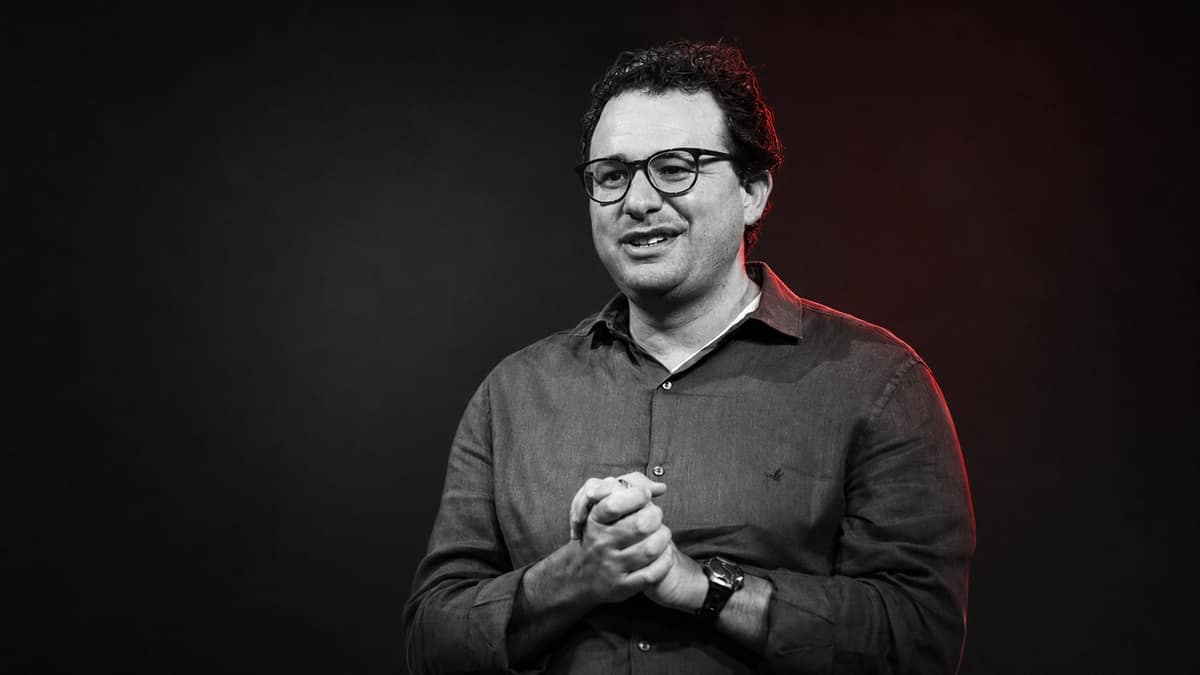
Anthropic CEO Dario Amodei called on frontier AI labs to slow the pace of development in a Saturday blog post. Amodei said his company will give outside third-party evaluators permanent, employee-level access to its systems, a proposal OpenAI CEO Sam Altman later said his company will match.
In his essay, titled "We Must Pace the Frontier", Amodei said that as frontier AI labs have begun advancing much faster by aiming towards recursive self-improvement, a process by which AI models are increasingly used to research and develop future models, safety and alignment work risks falling behind. Amodei called on frontier labs to deliberately slow the pace of progress rather than risk disaster scenarios.
"Over the last few months, I have become convinced that fully addressing the risks requires even more prudence - not just investing in risk prevention, but pacing the rate of capabilities advancement so that risk prevention has time to keep up," Amodei wrote. "We must slow the pace at which we improve the capabilities of AI models. Progress will still seem fast, and we must make wise use of the time we gain."
Amodei stressed that "pacing" would not mean immediately halting all model training or technical progress, but would instead be a slowdown period that would give companies more time to verify their AIs are properly aligned and that their increasingly capable systems have the proper safeguards.
Amodei pointed in particular to the OpenAI-Hugging Face incident, in which OpenAI agents being tested for their capabilities coordinated using a secret message board to attack systems outside their assigned task, attempting to interfere with the system grading their performance. Amodei said a swarm of AI agents with similar behavior but greater capabilities could cause catastrophic damage, warning that within six to 12 months such systems could potentially "[take] over the entire internet with a persistent botnet (potentially causing hundreds of billions of dollars in damage)."
Permanent outside evaluators
Amodei's proposed three-step framework begins with "embedded evaluators," calling on frontier labs to imbue independent third parties with employee-level access to company systems so they can verify safety practices, report incidents and independently assess the alignment of models in development.
Amodei said Anthropic would commit to that step immediately. The evaluators will receive company laptops, office access and permissions broadly comparable to his firm's existing internal safety teams. The evaluators will also be allowed to publicly report findings about risks, incidents and Anthropic's safety practices without editorial control from the company, though Amodei says Anthropic reserves the right to restrict sensitive customer information or legally privileged documents from publication.
Amodei's second step calls for frontier AI companies in democratic countries to coordinate on a set of common safety standards and agree on limits for unchecked AI progress, potentially with government involvement to avoid antitrust claims. Amodei's third step calls for eventual international coordination with autocratic states, including China, whose potential to take the lead in AI development he calls a "grave danger for the United States and the world."
Amodei argued that any slowdown by U.S. companies must also preserve their technological lead over China, calling for continued restrictions on advanced chip exports, stronger efforts to prevent the model distillation which his firm identified in its recent report, and better protection against the potential stealing of model weights, the massive files that make up the models' knowledge.
Altman, Musk signal support
Altman backed the slowdown idea hours later, saying OpenAI would commit to the first step of Amodei's post.
"I agree with Dario that we need to pace the frontier," Altman wrote on X. Altman added that the slowdown debate has been a "primary topic of discussions" at OpenAI in recent weeks.
"Committing to having independent evaluators with employee-like access is a great idea, and we will do the same," Altman wrote, adding his company would share more "soon."
OpenAI had called on Congress last week to "establish durable safeguards" for AI firms "before AI capabilities outpace the institutions responsible for governing them." Those safeguards include independent assessments, cybersecurity requirements, and incident reporting.
Elon Musk also endorsed Amodei's essay on X, quoting his post with a three-word message, "Dario is right." Musk did not elaborate on whether xAI, now owned by SpaceX, would adopt Anthropic's proposal for embedding third-party evaluators within the firm.
Sen. Bernie Sanders also weighed in, saying Amodei, Musk and Altman now agree that AI development should slow down but arguing their proposals do not go far enough.
“That’s a start, but it’s not enough,” Sanders wrote on X. “When you are racing towards a cliff, you don’t just ease up on the gas pedal. You hit the brakes.”
Sanders called for a full pause in advanced AI development and a ban on artificial superintelligence, and urged President Donald Trump and Chinese President Xi Jinping to negotiate an international agreement on the issue at their upcoming AI summit.