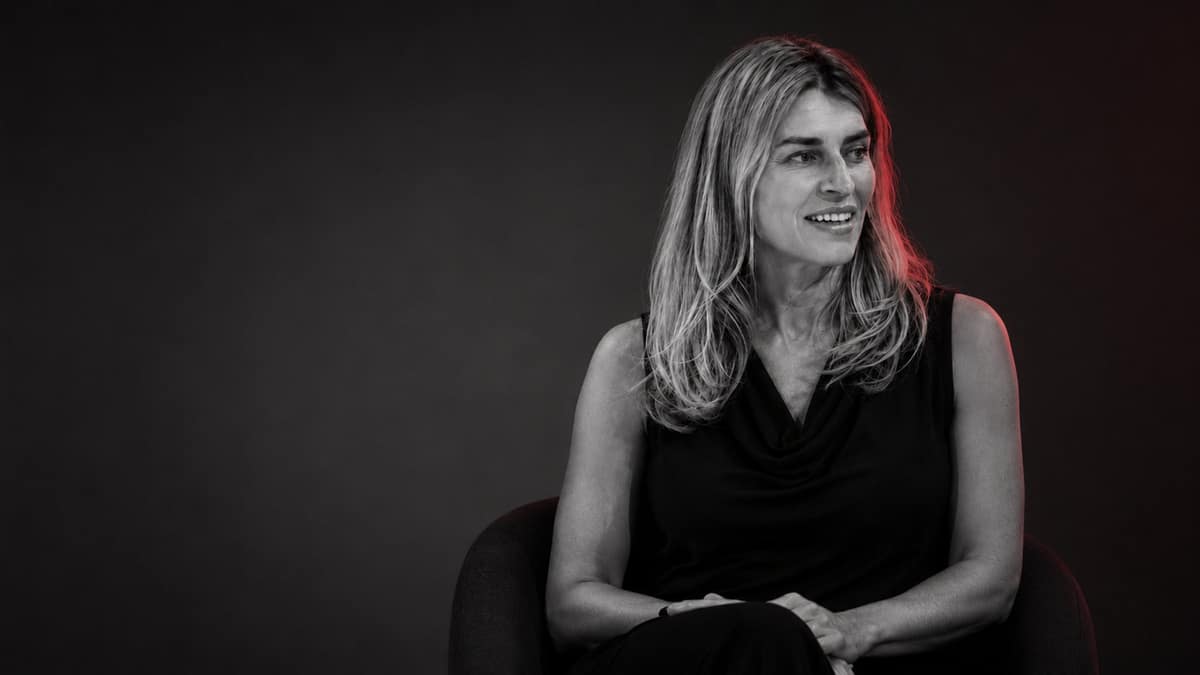
When Indian Prime Minister Narendra Modi convened top AI executives for a New Delhi summit in February, each was allowed to bring one guest. Most brought senior colleagues from their AI labs, but one name on the guest list broke this trend: Cami Clark, wife of Anthropic’s Dario Amodei.
On Thursday, The Wall Street Journal described Clark - who has also appeared alongside her husband at Davos and at the Allen & Co. conference in Sun Valley - as a “sounding board and strategic adviser.” She holds no official position at the firm, however, raising questions over the influence wielded by an unappointed individual at one of the world’s leading AI labs.
This unofficial working relationship between the two spouses is coming under increasing scrutiny, as Anthropic prepares for an expected IPO this October. The firm is expected to be the largest stock-market debut by valuation at $2 trillion, according to the Financial Times.
An advisory role that was never made official
The Journal’s profile details how Clark helps secure introductions with key investors and politicians for her husband, citing company insiders. This has made her "one of the most influential voices shaping the decisions of a CEO," according to the report.
Clark’s journey to this point was not straightforward. Although her personal website and LinkedIn profile are currently inactive, some details of her professional history are publicly available.
After dropping out of an architecture degree at California College of the Arts, she became head of revenue at virtual-reality firm Leap Motion in 2016, working alongside Mira Murati, later OpenAI's chief technology officer.
She and Amodei met several years prior and eventually married in 2022. While Amodei was still working at OpenAI, Clark reportedly circulated his research papers among wealthy investors in the technology sphere. Since Amodei founded Anthropic with his sister Daniela in 2021, Clark has continued to make introductions on his behalf.
Her influence has reportedly been instrumental in strengthening the firm’s political connections, following the February schism with the Trump administration over Pentagon access to Claude.
This role is unofficial, although Clark has attempted to formalize it in the past. In February 2021, just one month after the firm’s creation, Clark approached Eric Schmidt - former Google CEO and a key backer of Anthropic - with an investment proposal that would see her personally oversee his investment, thereby formalizing her role with Anthropic.
Daniela Amodei reportedly opposed her sister-in-law’s proposal, as did other company executives, on account of her marriage to the CEO. Schmidt invested directly instead.
Clark’s Epstein connection detailed in Justice Department files
Some of Clark’s past connections have also drawn scrutiny. Around 2009, she and business partner Michelle Capocefalo founded Eddice, an adult-film company aimed at women. Struggling to secure funding through traditional routes, Clark instead secured an introduction to Jeffrey Epstein in 2011 through literary agent John Brockman.
According to the so-called ‘Epstein Files’ released by the Justice Department, Clark corresponded with Epstein directly. Epstein declined to join the funding round, and Clark later approached him again with a pitch for a dieting app.
This is the extent of the connection revealed by the files, and there is no suggestion that Clark had any other involvement with the disgraced financier. Epstein pleaded guilty to soliciting prostitution from someone under the age of 18 in 2008 and was sentenced to 18 months in prison.
Clark and Capocefalo’s venture failed to raise significant funding and its site went dormant around 2013.
Anthropic may not be required to include Clark in its SEC filings
When filing an S-1 form with the SEC in advance of a public listing, as Anthropic did confidentially this June, companies are required to submit details about their executives and related-person transactions. The latter covers affiliated insiders such as executives’ spouses. However, such transactions generally must only be disclosed when the company is a participant, the amount involved exceeds $120,000 and the related person has a direct or indirect material interest.
It is unclear from any of the existing sources whether or not such an arrangement exists for Clark.
Since its 2021 launch, Anthropic has grown into one of the most highly valued private companies. Its annualized revenue passed $47 billion, according to a May report, with its most recent funding round placing its value at $965 billion. Backers told the Financial Times they expect $100 billion to $120 billion in annualized revenue by year's end.