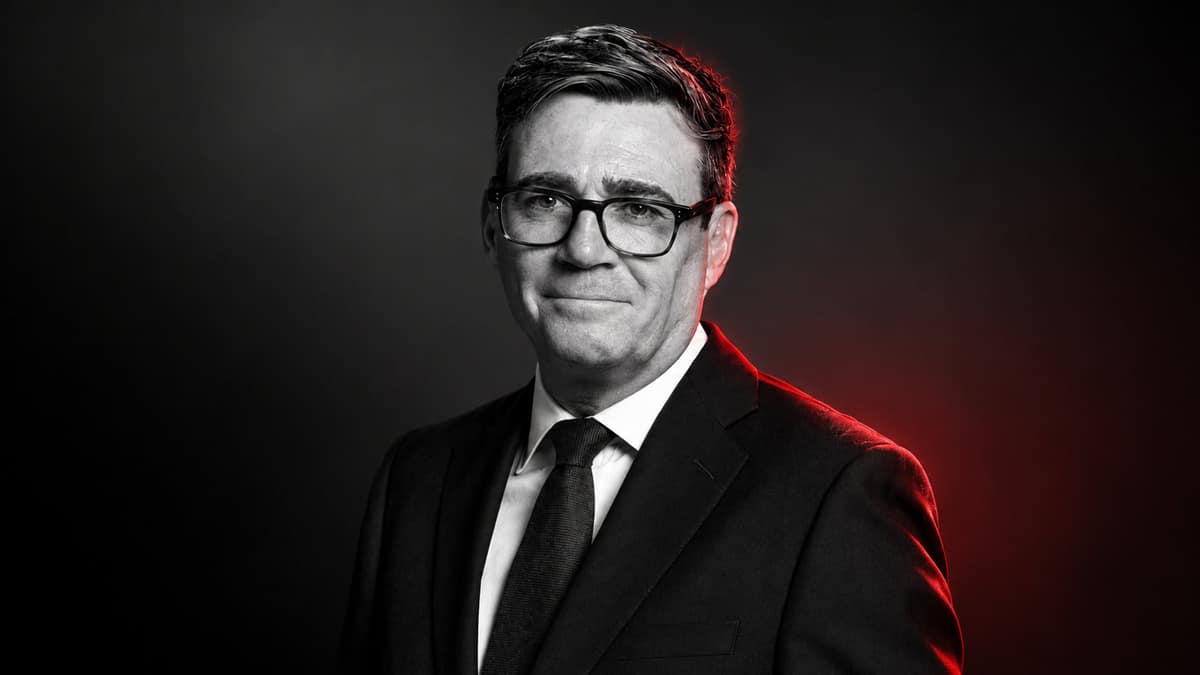
Burnham says the UK will use its G20 presidency next year to seek global AI standards
Burnham announced a new AI defense partnership with the US to protect critical infrastructure
Burnham says the UK may bring forward new AI laws to protect the public
Burnham says AI could boost growth and cancer diagnosis but also multiply risks
OpenAI and Anthropic CEOs are expected to brief the UN Security Council on AI today
In a wide-ranging speech to the UN General Assembly late Tuesday, UK Prime Minister Andy Burnham said the country will put artificial intelligence "at the heart" of its G20 presidency next year.
Burnham acknowledged the significant opportunities presented by the rapidly advancing technology, including speeding up cancer diagnosis with the potential to help cure it, becoming a key driver of economic growth, transforming education, and providing a vital safety tool.
However, he also reflected on its potential to disrupt the way we live and work, and as a multiplier of risk. "We've all heard the warnings - which we must heed," he said. "I know how worried people are."
Drawing an analogy to the G20's response to the 2008 financial crisis, Burnham said leaders "moved quickly to deliver an urgent, practical response," coming together to agree on principles that each country then implemented in a way that worked for them.
In the same vein, under its presidency, Burnham said the UK will work toward agreeing a single set of global principles and standards on transparency and access to "ensure that AI development is safe."
For the UK's part, Burnham said he wanted to reassure the British people that his government will do "whatever is necessary to protect them," including bringing forward new laws if required.
AI defense partnership
Burnham also announced a new AI defense partnership with the U.S., designed to help protect critical national infrastructure.
The Prime Minister said fundamental decisions on the technology are too important to be left to chance and "must be taken by elected governments who serve working people," pushing for it to become an "engine for reindustrialization."
"There is a lesson in the first industrial revolution, which started in Northern England two centuries ago. It was a time of incredible technological progress," Burnham said. "But for workers, the disruption brought huge suffering and exploitation. Things got a lot worse before they got better. So this time we need to get it right."
Burnham argued that the UK is up to the task, and that the country has some of the best tech and AI talent in the world.
OpenAI CEO Sam Altman, Anthropic CEO Dario Amodei, and executives from other global AI labs are expected to brief the UN Security Council today.
The meeting comes amid growing debate over the pace of frontier AI, with Altman, Amodei, and SpaceXAI's Elon Musk all recently backing calls for a slowdown in development for safety reasons.
"As His Majesty said, the task before us 'is not merely to advance technology, but to ensure that it remains firmly in the service of humanity,'" Burnham said, referring to last week's private UK AI summit hosted by King Charles.