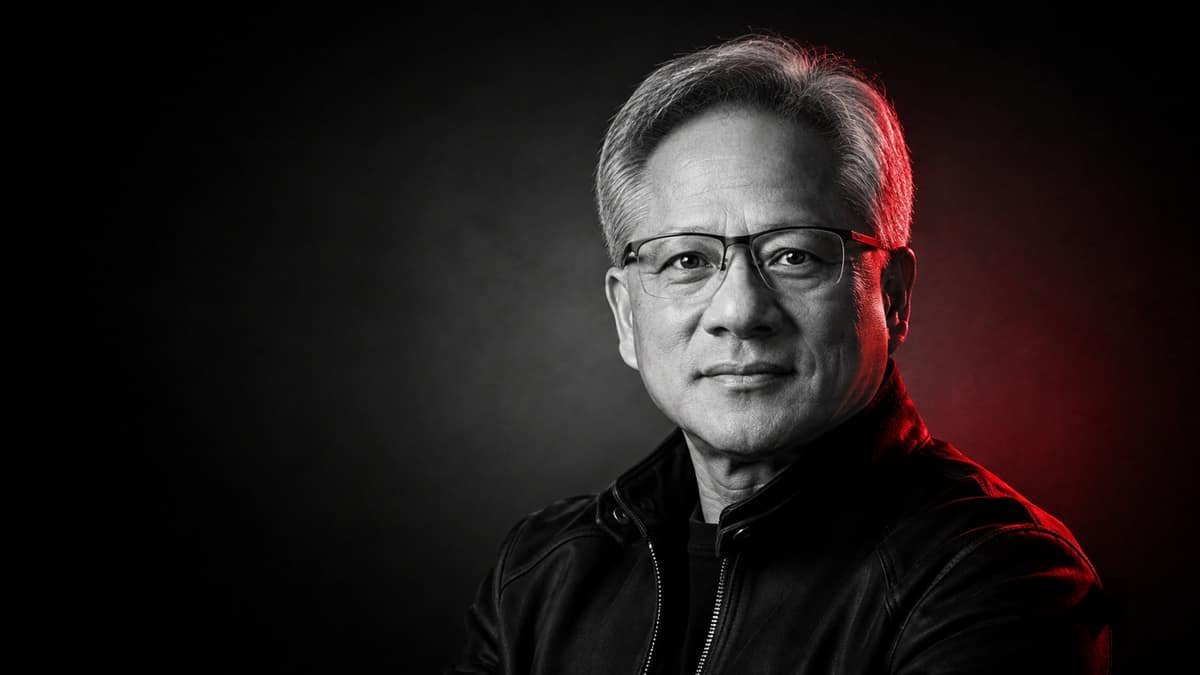
Nvidia CEO Jensen Huang has called for AI rules that focus on practical harm rather than theoretical risks, saying the technology is still advancing.
Huang made the comments on Wednesday after speaking with U.S. Commerce Secretary Howard Lutnick at a G20 technology meeting in Chapel Hill, North Carolina. The Trump administration is using the event to push countries toward a light-touch approach to AI regulation.
"The technology is in its formative stages, and the advice that I would have is to regulate practical and actual harm, and not regulate theoretical and hypothetical harm," Huang told reporters. "We want to make sure that the technology advances in a safe way."
Huang said future developments could make AI safer and more useful. He said companies should take the main responsibility for developing and releasing AI safely. For countries considering whether to move more slowly, he said the "single worst outcome" would be getting left behind.
The U.S., which holds the G20 presidency this year, is urging member countries to support the "Carolina Principles." They take a hands-off approach to AI regulation and call for avoiding new rules for the technology. Earlier this week, Tesla and SpaceX CEO Elon Musk also called for light touch regulation and criticized the European Union's tech rules, saying they slow innovation.
Microsoft co-founder Bill Gates, on the other hand, last week said the world is not ready for the AI transition and called for national and international systems to manage its risks.
'Every single country needs to build [AI] infrastructure'
Huang also said every country should build its own AI infrastructure, comparing it to roads, electricity, water and the internet.
"Every single country needs to build infrastructure so you can support your own local economy," he said, calling AI "the great equalizer."
Huang described AI infrastructure as a "five-layer cake," with energy at the bottom, followed by chips, data centers, AI models, and data and applications. He said countries do not need to build every layer but should decide where they want to invest and help local industries adopt the technology.
The U.S. is "more deeply invested in inventing, building, developing the entire five-layer cake," Huang said. "The most important part is that every single country should advocate for AI diffusion or the adoption of AI into your industries."
The G20 meeting is taking place as data center construction faces public opposition in parts of the U.S. over its effects on power supplies, water use and local communities. President Donald Trump this week said communities opposing data centers risk becoming "backwards and poor."
Anthropic co-founder and chief compute officer Tom Brown also supported faster data center construction during the meeting. Brown said shortages of power and labor are now a major barrier to AI development.