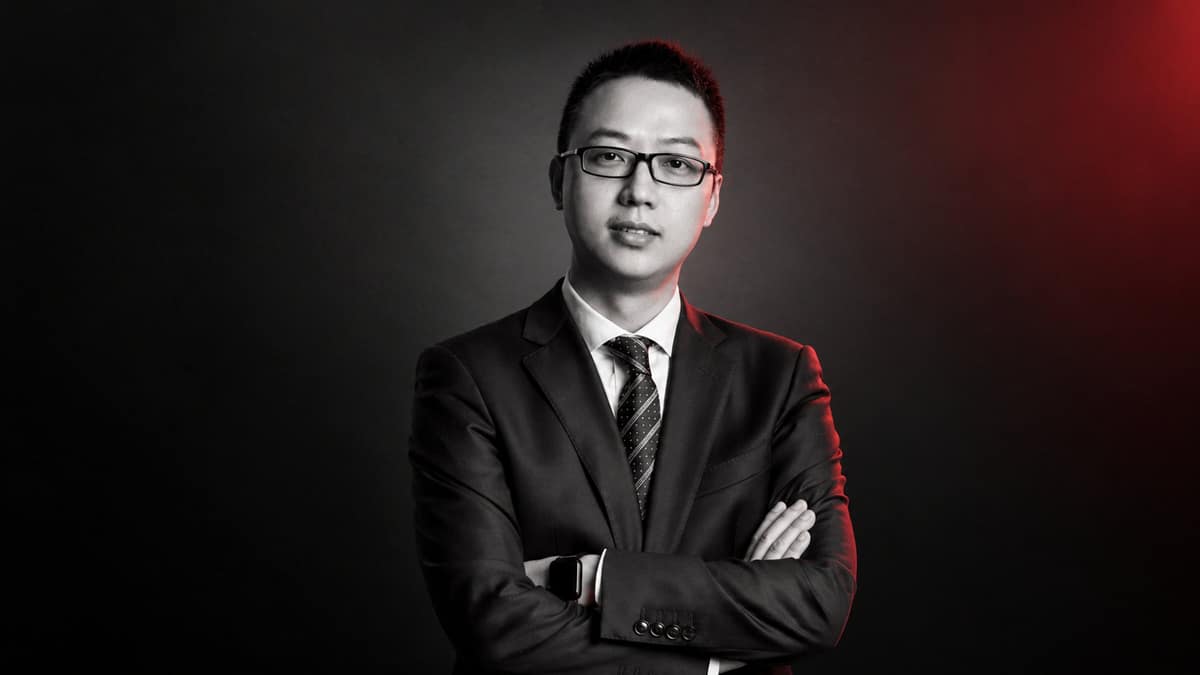
Alibaba says its V900 AI chip should deliver three times the predecessor's performance
Alibaba says one V900 cluster can support up to 500,000 cards for AI training and inference
Alibaba plans a 5 trillion to 10 trillion parameter model for self-iterating ASI, Wu said
Alibaba targets over 20 gigawatts of global data center capacity by 2032, Wu said
Alibaba says AI supply shortages are limiting the pace of compute infrastructure expansion
Alibaba Group has unveiled a new AI chip that is expected to deliver three times the performance of its predecessor, as the Chinese tech giant races to compete with Nvidia.
During a Tuesday speech at Alibaba Cloud's annual Apsara Conference in Hangzhou, Chief Executive Officer Eddie Wu introduced the Zhenwu V900, the company's next-generation AI chip developed by its T-head semiconductor division.
The new chip is designed to deliver three times the performance of its predecessor, the Zhenwu M890, while a single cluster built on V900 can support up to 500,000 cards to power frontier model training and inference, according to Wu.
"Backed by the proven maturity of T-head product lines and widespread adoption across our clients, we anticipate a significant growth in the annual AI chip shipment volumes," said Wu.
Alibaba's development of AI chips comes as China pushes to build domestic alternatives to advanced U.S. technology. The U.S. has restricted China's access to some high-end AI chips and chipmaking equipment through export controls, prompting Chinese authorities and companies to step up efforts to develop homegrown technologies. Huawei, for example, said last week that it plans to launch two new AI chips in 2027.
Alibaba has also set a target for its global data center capacity to surpass 20 gigawatts by 2032, Wu said, as demand for AI "remains exceptionally robust."
"We recognize that the industry's mid-to-long-term demand far outpaces our supply capabilities," Wu added. "Global shortages across the AI data center supply chain are currently limiting the speed at which we can scale our compute infrastructure."
Advancing AI models
On AI models, Wu said Alibaba's Qwen team has made "meaningful progress" on recursive self-improvement.
"By engaging with real-world tasks and feedback, models identify their own limitations. They autonomously design experiments, synthesize data, and evaluate outcomes, driving a continuous cycle of self-evolution," said Wu.
Notably, Wu said the team plans to train a new model at the scale of 5 trillion to 10 trillion parameters to advance toward what Alibaba calls self-iterating artificial superintelligence (ASI).
Parameters are variables that a model learns during training to map inputs to outputs, and a set of parameters represents all the knowledge it has extracted from the training data. Alibaba's Qwen 3.8 Max, a model it launched in August, has 2.4 trillion parameters.
Machine Intelligence
Wu also said an era of "Machine Intelligence" will take shape as ASI emerges and AI infrastructure scales.
Drawing a comparison with the Industrial Revolution, the chief executive predicted that machines could eventually produce over 1,000 times more "thinking" than all of humanity combined.
"Today, machine power already drives 99.9% of the world's physical work," he said. "In the future, the total amount of Human Thinking will continue to grow, but Machine Thinking will expand even faster, ultimately shouldering 99.9% of all Thinking."
Wu said machine thinking still has an "enormous growth runway."
"The truly groundbreaking products of the Machine Intelligence era have not yet arrived," Wu added.