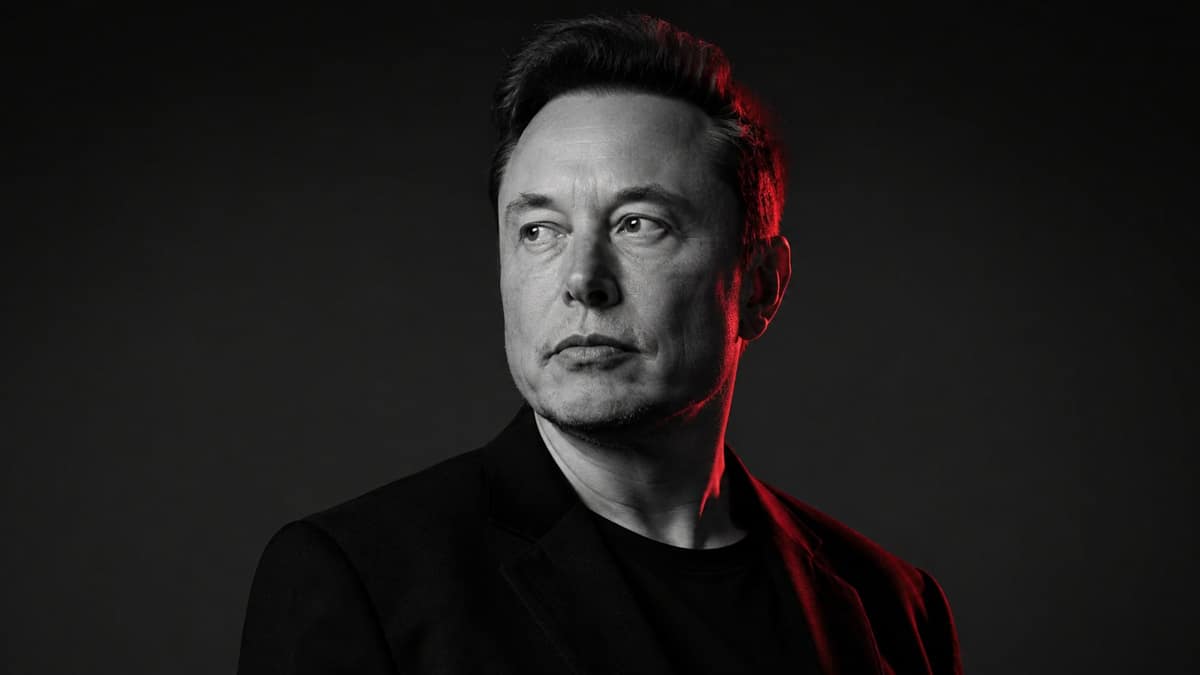
SpaceX and Tesla released tandem announcements this Thursday, detailing the scale of their combined investment into Terafab: the planned 100-million-square-foot silicon chip fabrication plant that founder Elon Musk claims will be "the largest and most valuable building on Earth by far." Together Musk’s two companies will commit $16.8 billion to the initial building phase for the facility, which will be located in Grimes County, Texas.
Neither has previously manufactured any chips, instead relying on suppliers such as Samsung, TSMC and Micron. However, Musk estimates that the expansion of his firms’ artificial intelligence initiatives will drive their demand to 1 terawatt of compute power every single year, far greater than the 20 gigawatts the entire industry can currently produce.
The Terafab project - first announced in March - aims to make up for that shortfall while bringing chip production in-house. SpaceX says the site will handle logic chips, memory chips, packaging and testing in one location, rather than spreading these out across multiple third parties. Intel announced in April that it would assist in the chip development process, although little is known about the extent of its planned involvement.
These resources will power projects including Tesla’s Cybercabs and Optimus robots, as well as SpaceX’s orbital data centers. Musk added that the split will be roughly one quarter for the former and three quarters to the latter.
It’s worth noting that the plan is still in its early stages, and the $16.8 billion discussed this week is also only a fraction of the maximum estimated build cost of $119 billion. These recent announcements, however, put the two companies one step closer to breaking ground.
Grimes County residents are divided on Terafab
Terafab is expected to bring around 3,000 jobs to Grimes County and neighboring Brazos County; however, many are skeptical of the effect this gargantuan fabrication plant will have on the local area. A packed commissioners court meeting on Wednesday saw residents deliver a petition with 728 signatures, demanding protections for local roads, water and emergency services.
SpaceX reiterated that it will draw its water supply - required for cooling semiconductor equipment and rinsing silicon wafers - from Gibbons Creek Reservoir. It also plans to build private power plants rather than relying on the state grid.
Another controversy relates to the tax advantages offered to SpaceX and Tesla by Grimes County in order to incentivize them to build there. At the same meeting, a SpaceX attorney argued that the overall effect of the agreement amounts to roughly a 78% property tax abatement, rather than the 10-year 100% relief deal previously reported.
The representative added that SpaceX has also agreed to pay the county $20 million per year for the next 35 years.
How the markets are responding to Terafab
The collaboration between Musk’s two companies on Terafab has fuelled speculation that a merger may be on the cards. Musk has categorically denied these rumors, although reports from recent weeks suggest that internal preparations may be underway; senior staff at Tesla’s Chinese division were reportedly told to prepare for a split from the parent entity, which some interpreted as a necessary precursor to a Tesla-SpaceX merger.
The latter company’s stock has performed poorly since its record-breaking IPO in June, now sitting below its initial listing price of $135. Its Wednesday close set a new all-time low of $108.77.
Thursday also marked the first lock-up expiry on SPCX stock since its public listing, with around 911.5 million insider shares freed up for trading. Regardless, SpaceX still rebounded from that midweek low, closing the day near $115.