
A Chinese-speaking hacker broke into more than 100 company websites over the past couple of weeks with the help of AI agents, as observed by cybersecurity firm NorForge.
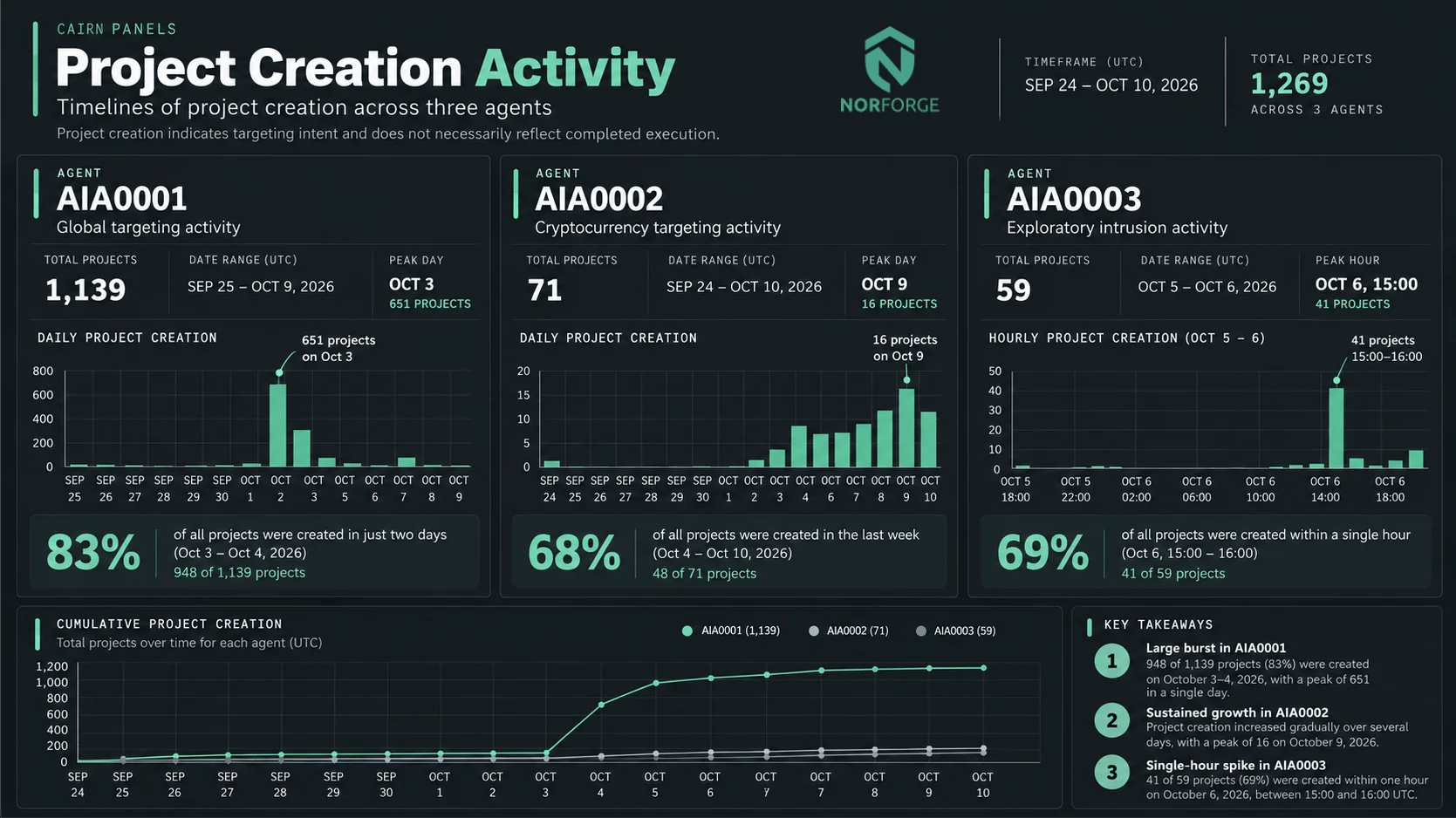
The hacking spree was almost entirely outsourced to artificial intelligence, NorForge principal threat researcher Snorre Fagerland told Reuters, one of several he identified while searching for exposed instances of Cairn, an open-source AI platform that hackers have used to automate cyberattacks.
NorForge's report documented more than 1,100 attack projects linked to the Chinese-speaking hacker but did not name the victims. However, Reuters reported on Monday that victims included farm equipment maker Deere, home appliance company SharkNinja, and engine manufacturer Cummins, citing a review of the hacker's Cairn activity.
The cybersecurity expert said it was evidence that commercially available AI agents can now pull off such attacks with limited intervention, dramatically boosting the impact of a single malicious actor. "It's a new world now," he said.
Fagerland estimated that the campaign cost roughly $5,000 in AI usage, or about $50 per successful breach. NorForge said the agents may have used Anthropic's Claude Code coding tool with a DeepSeek model, although the researchers could not confirm the setup. Reuters was unable to establish how much data, if any, had been stolen.
Deere told Reuters it had addressed the incident and found no evidence that sensitive information had been accessed. SharkNinja said the breach was limited to a separate website containing product support information and had been contained. Cummins said it was investigating a possible cyberattack involving a website operated by one of its third-party vendors.
Fagerland also observed a separate hacker stealing credit card data, while another attempted to use AI agents to rob a cryptocurrency exchange. However, the Chinese-speaking hacker was the most prolific, he said, pointing their AI agents toward e-commerce websites across the U.S., Canada, Australia, and Japan since late September.
'It's not script kiddie stuff'
Fagerland said some of the agents' methods were surprisingly sophisticated. In one case, after failing to find a vulnerability in a major company's website, the agents searched for other systems connected to it and found an exposed control panel. They then identified a flaw in how the panel handled data and, after hours of testing, reported exploiting it to make the server execute malicious commands.
"It's not straightforward to come up with solutions like that," he said. "It's not script kiddie stuff."
AI security concerns have extended beyond criminal use in recent weeks, with rogue AI agents inadvertently unleashed by frontier labs like OpenAI, hacking their way out of sandboxed environments and breaking into government systems.
Fagerland said he had previously thought AI hacking agents would still require some level of human oversight, but the findings had changed his view. "The development in this field is astounding," he said.