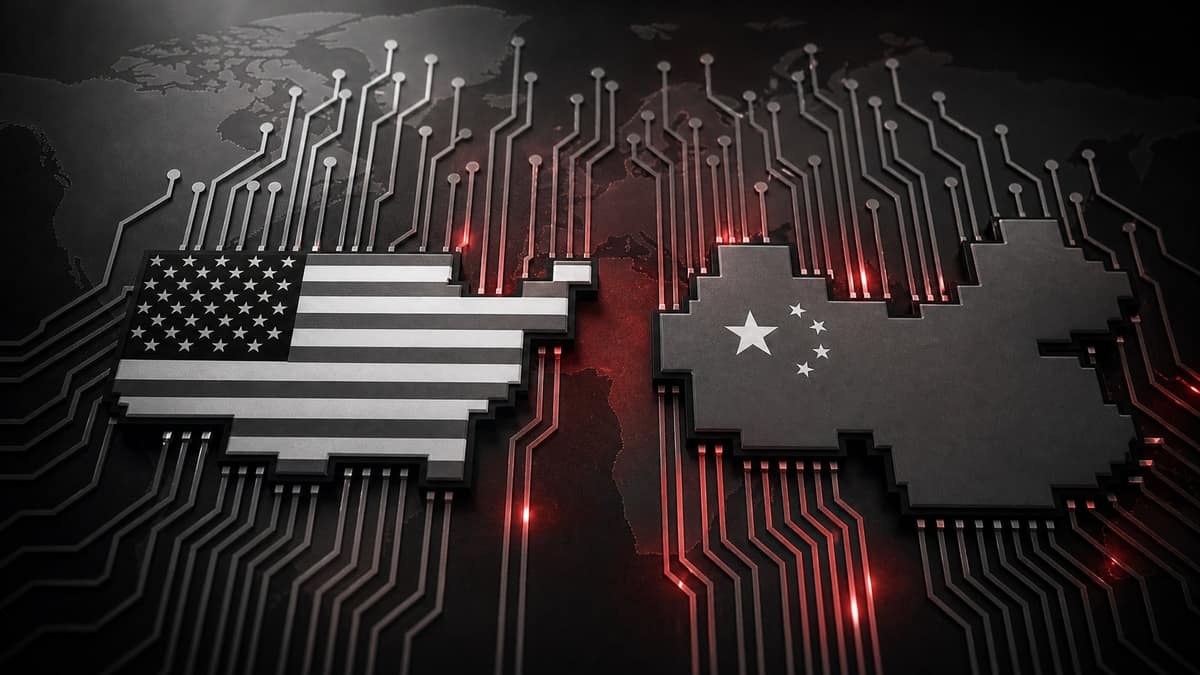
The United States and China are working to build a "crisis mechanism" as concerns about artificial intelligence's threat to safety grow, but the two presidents seem to have diverging views on how significant those risks are.
On Thursday, President Donald Trump and Chinese President Xi Jinping held multiple meetings, and later a state dinner closed to the media. Guests at that state dinner included tech titans, including NVIDIA CEO Jensen Huang, Meta CEO Mark Zuckerberg, NYSE President Lynn Martin, BlackRock CEO Larry Fink, OpenAI CEO Sam Altman, and Amazon Chairman Jeff Bezos. Anthropic CEO Dario Amodei was not on the list of invited guests, according to a list released by the White House.
On Friday morning following those events, the U.S. Ambassador to China David Perdue, who was also at the dinner, told CNBC's Squawk Box that the countries have two different approaches to AI and are continuing talks along with a "crisis mechanism."
"We've established this dialogue and also a crisis mechanism between the two countries," Perdue said. "That's historic."
The White House did not respond to a request for comment on more details about the mechanism. Treasury Secretary Scott Bessent reportedly said earlier this week that the U.S. had proposed a notification mechanism between China and the U.S. for national security-related AI incidents.
Bessent also attended Thursday evening's dinner.
Regulation of AI has come into the spotlight over the past few months amid a series of hacks and concerns that models can be out of companies' control. In September, Jacob Coxon, a researcher who had worked at both OpenAI and Anthropic, resigned from Anthropic and publicly accused the companies of moving too quickly toward AI, saying that they were "racing straight to self-improving superintelligence and gambling with our lives."
Since both AI CEOs Altman and Amodei have supported calls for stronger safeguards and a slower pace of development, arguing that governments and companies need to address potential risks as AI capabilities advance further.
Xi said on Thursday that both countries have the responsibility to "develop and manage AI for good," and make sure that humans are always in control, according to news reports.
Trump is taking a different tack.
In a Truth Social post on Friday morning, he said meetings had been productive and again touted his idea to call AI "Super Intelligence" instead.
"Like almost everyone else, he seemed to like calling the poorly and inaccurately named Artificial Intelligence to a far more accurate and important name, SUPER INTELLIGENCE," Trump said. "That would be 'SUPER!' Everyone last night agreed, also."