The process of AI “distillation” has been a core point of contention for Washington policymakers this year. This involves training a weaker model on the outputs of a superior one, allowing it to mimic the outcomes of its more powerful peer for a fraction of the cost.
In April, the White House science office accused foreign companies, particularly Chinese developers, of using this technique in large-scale campaigns to extract the capabilities of American models. In the eyes of the U.S. government, this is akin to industrial theft. Treasury Secretary Scott Bessent proposed that sanctions could even be applied against Chinese firms as a result.
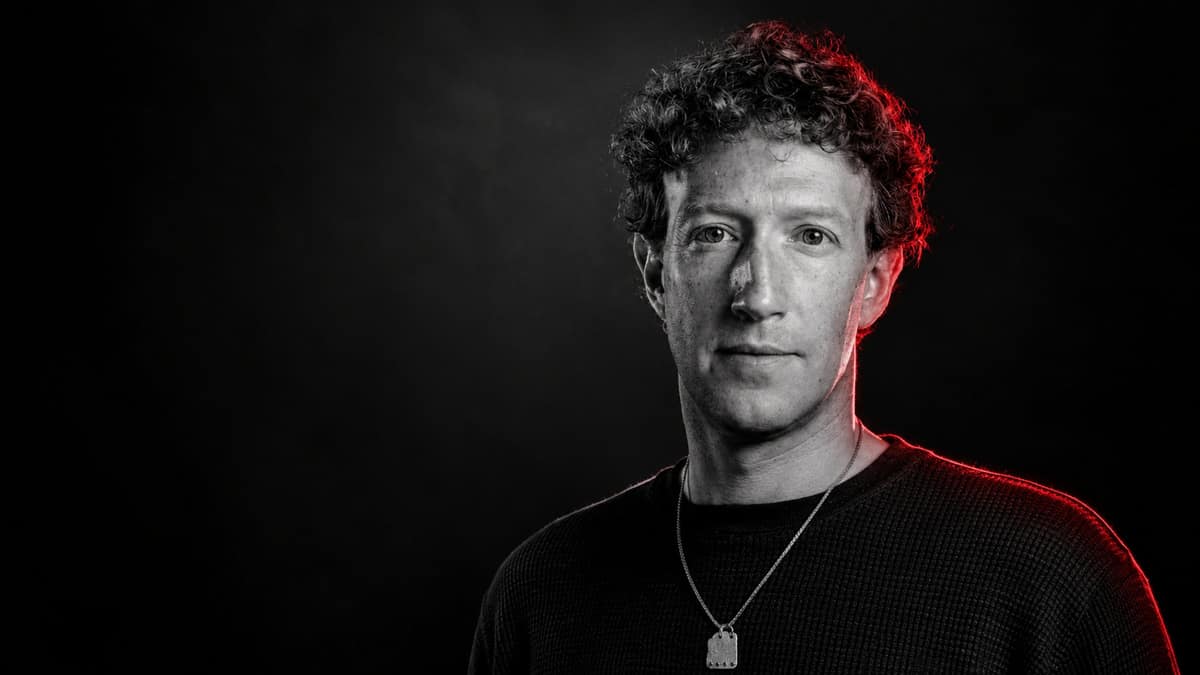
However, this week Meta’s Mark Zuckerberg offered an alternative approach. In an open letter published in Meta’s newsroom, he argued that cross-model training is an “important principle of how the open-source ecosystem works” - one that U.S. policymakers would do well to accept rather than resist.
Zuckerberg’s article accompanied a new open-weight model release from Meta, which helped its shares close up 2.4% for the day.
Zuckerberg's argument is about competitiveness
Meta’s new open-weight model Muse Glimmer, released the same day as the letter, was itself developed using distilled outputs from Muse Spark. With weights under 20GB, the 30-billion-parameter model can reportedly run locally on a suitably equipped Mac or a PC with a single consumer GPU.
Zuckerberg’s 14-page letter, titled “The Future is for Everyone,” acknowledges that distillation is occurring in the AI industry, but adds that this is a normal part of how the ecosystem functions.
Introducing greater friction into international flows of technology and data, the letter asserts, would harm U.S. competitiveness. For the same reason, the Meta CEO argued against blocking Americans from accessing foreign open models. Nvidia, Microsoft and others have taken a similar position, co-signing another July 24 open letter alongside Meta opposing such restrictions.
Critics have argued, however, that Zuckerberg’s argument fails to address a central issue: that Chinese developers have reportedly extracted outputs from U.S. models via paid API access, constituting a breach of terms of service.
In February, OpenAI told the House Select Committee on China that leading Chinese AI lab DeepSeek had done just that by using third-party routers to hide its trail. That same month, Anthropic accused MiniMax, Moonshot and DeepSeek of extracting capabilities from its flagship Claude models.
Washington’s direction remains undecided
That leaves policymakers caught between two competing priorities: preventing U.S.-developed capabilities from being cheaply replicated overseas while avoiding restrictions that could undermine the open ecosystem American companies themselves increasingly rely on. Unauthorized extraction through APIs could still be treated as a contractual or security problem without turning distillation itself into a prohibited practice.
Whether U.S. lawmakers will push ahead with broad restrictions on foreign open-weight models is still up in the air. Last month, Axios reported that a planned executive order that would have made U.S. companies liable for any Chinese models hosted on their servers was scrapped.
Both Congress and the U.S. AI industry are split on whether such protectionism will help or hurt the domestic market. Concerns over distillation and the threat of sanctions will likely be raised in September, when American and Chinese representatives are expected to meet for the first bilateral AI talks of the Trump administration.
U.S. delegates are expected to raise concerns over Chinese access to U.S. chips and models, while Beijing’s priorities include the potential national security threats posed by leading U.S. AI models.