Confidence in the competitive edge of Google’s AI division was visibly shaken on Wednesday, with Alphabet shares falling 4% on the news that one of its longest-serving employees is departing the firm. Chief scientist Jeff Dean is leaving after 27 years at the company, according to a report from Axios.
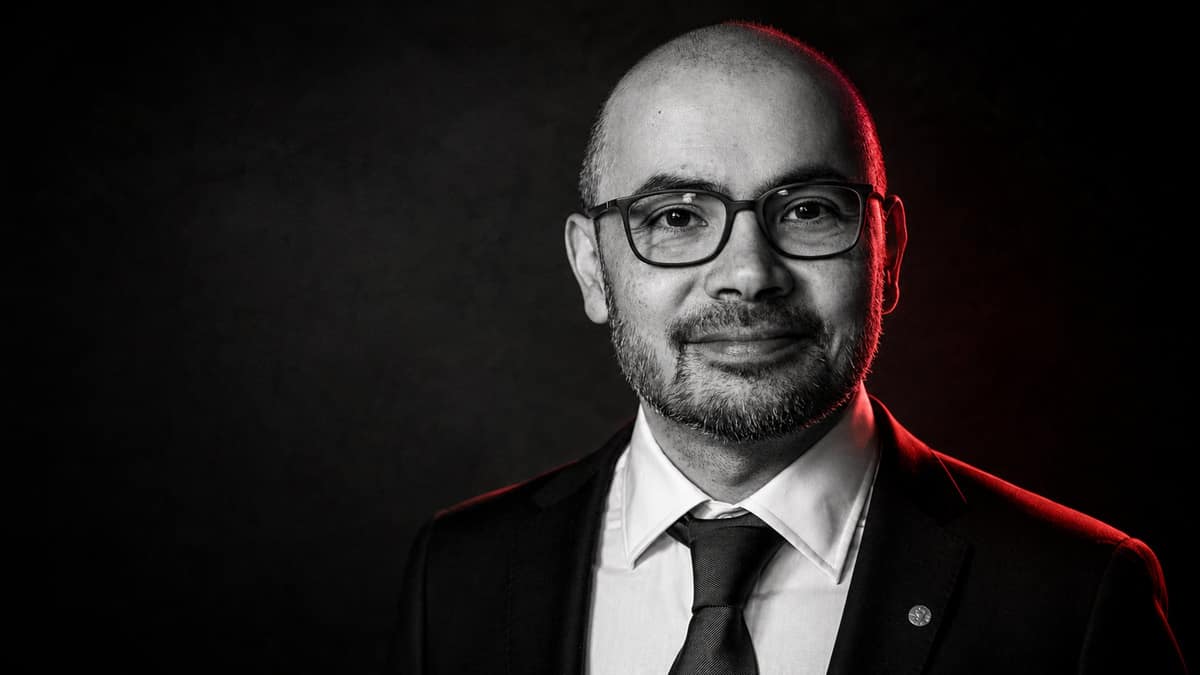
DeepMind co-founder and Nobel laureate Demis Hassabis - who successfully sold the London startup to Google in 2014 - likewise announced he will be stepping down as CEO. Hassabis will instead transition to the roles of chairman of Google DeepMind and chief scientist of Alphabet. His position as CEO of pharmaceutical research firm Isomorphic Labs, itself a spinoff of DeepMind, remains unchanged.
In a memo announcing the change, Hassabis said that DeepMind CTO Koray Kavukcuoglu will take over daily operations as senior vice president. He added that he believes artificial general intelligence is “close at hand,” and his professional move reflects a shift in priorities towards preparing for what will happen when that technology arrives.
Dean’s new company targets automation of scientific research
Until this week, Dean was one of Google’s longest-serving employees - the 30th to join the company in its early days as a search engine startup. According to a report from the Wall Street Journal, he will now embark on a new startup venture alongside other ex-Google AI experts Quoc Le, Oriol Vinyals and Sanjay Ghemawat.
Dean will serve as CEO of Discovery Loop, which aims to automate the processes underpinning scientific research. The firm will delegate the research loop - proposing an experiment, designing it, running it, reading the results, then proposing the next iteration - to machines, theoretically accelerating the process far beyond what human researchers are capable of achieving.
Significantly, Discovery Loop is being created as a “public benefit corporation”: a for-profit venture, but one whose charter places a moral mandate on its directors to weigh profits against the public good. Its ultimate research goals therefore focus on areas that provide a net social benefit, such as healthcare and clean energy. In the beginning, however, Discovery Loop will focus its efforts on machine learning and hardware design research, in order to optimize its own systems.
Dean’s departure from Google appears amicable, as his old employer is among the founding investors in Discovery Loop. Joining Google on the cap table are Khosla Ventures, Radical Ventures, Lightspeed, Kleiner Perkins and Doerr Capital. Discovery Loop’s initial valuation is unknown, as is the exact size of the stake that Google holds.
What is known is that Google has also allocated its own compute resources to the startup, with a one-year commitment.
Damaged Google seeks to close the gap with AI competitors
Google’s AI division arguably ceded ground to competitors under Hassabis; Gemini 3.5 Pro was slated for a public debut in June yet remains unreleased. DeepMind has also lost some core talent in recent months, with several senior researchers being poached by rival labs. According to reporting from Axios, these developments have contributed to an atmosphere of low morale at the frontier AI lab.
Alphabet’s overall performance remains strong, with the company reporting $119.8 billion in revenue in its latest quarter. However, concerns over the mounting cost of its AI expansion sent shares down as much as 7% following the results. Wednesday’s 4% pullback interrupted a strong rebound from that low, following a 13% rally.